
Summary
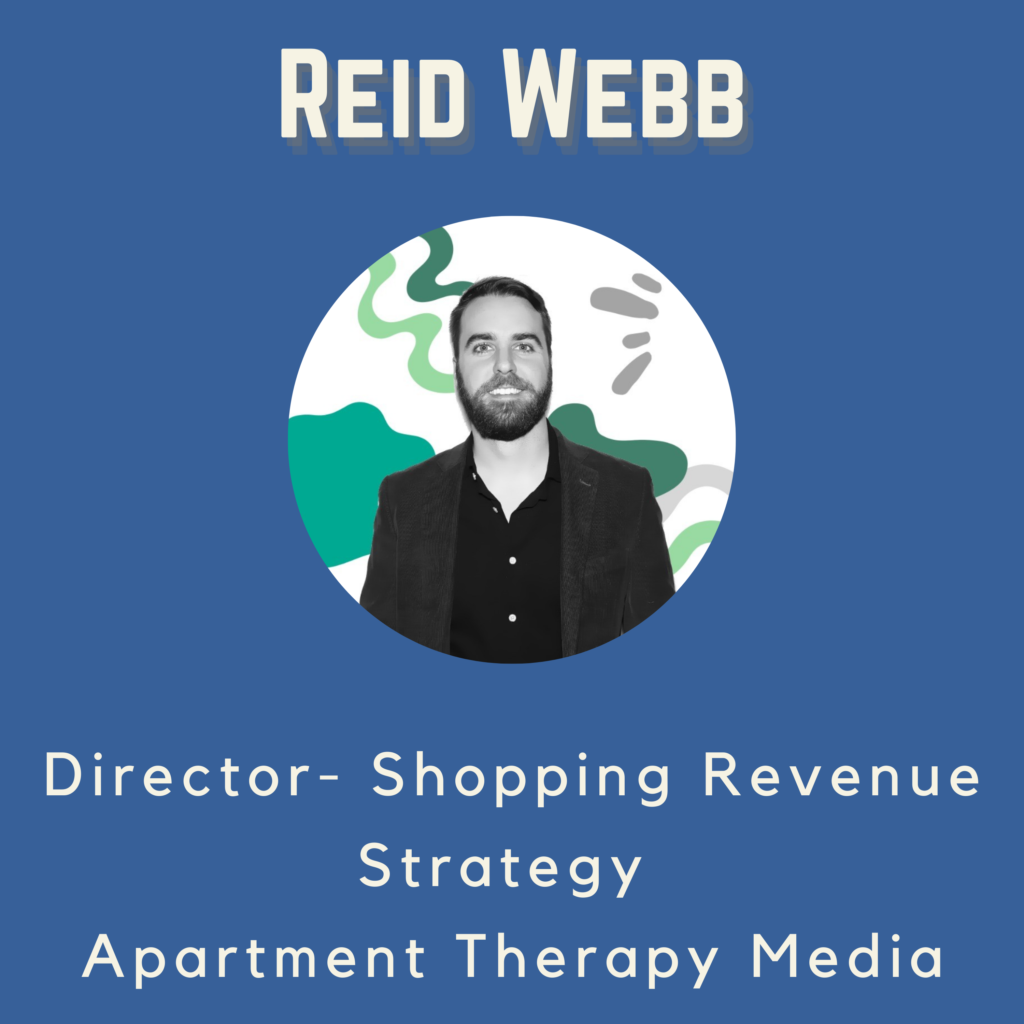
In this episode of Performance Marketing Spotlight, host Marshall Nyman sits down with Reid Webb, Director of Shopping Revenue Strategy at Apartment Therapy Media, to explore how publishers can adapt and grow in a rapidly changing performance landscape. Reid shares his journey from agency-side beginnings to building commerce revenue programs across major publishers including Apartment Therapy, The Kitchn, Cubby, and Dorm Therapy.
We discuss:
- How AI and shifting search traffic are reshaping publisher monetization
- Why off-site and social commerce are becoming essential revenue channels
- The challenges and opportunities of managing affiliate programs across multiple brands
- What metrics publishers should prioritize in an AI-driven environment
- Reid’s upcoming panel at Affiliate Summit West 2026, featuring voices from Opinary and other industry leaders
Whether you’re a publisher, brand, or performance marketer, this episode delivers practical insights on how to future-proof your commerce strategy.
About Our Guest
Reid Webb is the Director of Shopping Revenue Strategy at Apartment Therapy Media, where he oversees all aspects of shopping monetization, including affiliate partnerships, social commerce, and off-site revenue strategies. With nearly a decade of experience in the affiliate and performance marketing space, Reid’s career has spanned everything from copywriting and paid social at boutique agency Oak Digital to building robust commerce and partnership programs at The Daily Beast.
Known for his deep expertise and adaptable approach, Reid has managed explosive periods of growth and transformation in affiliate publishing, navigating industry shifts like the rise of AI, changes in tracking and attribution, and the evolving challenges faced by publishers. Reid is a regular speaker at major industry events, such as Affiliate Summit West, and is passionate about bringing innovation and grit to the performance marketing space while advocating for fair value and new opportunities for publishers.
Connect with Reid on LinkedIn or catch him sharing insights on panels about publisher monetization and the future of performance marketing.
Transcript
Marshall Nyman [00:00:01]:
Hello and welcome to the Performance Marketing Spotlight. I’m your host, Marshall nyman, founder and CEO of Naimo & Company. Each episode I bring you someone with deep experience in the performance marketing space where they share their career journey and insights about the industry. Today I have Reid Webb from Apartment Therapy. Welcome to the podcast.
Reid Webb [00:00:20]:
Reid. Thanks Marshall. Happy to be.
Marshall Nyman [00:00:22]:
Here. Excited to have you on. Let’s get right to it. Can you introduce yourself to the.
Reid Webb [00:00:28]:
Audience? Yeah, absolutely. So I’m Reid, I’m the director of shopping revenue strategy for Apartment Therapy Media. I’ve been in the affiliate space for what feels like an eternity, but yeah, going on close to a decade here and loved every minute of.
Marshall Nyman [00:00:45]:
It. How did you get your start in.
Reid Webb [00:00:47]:
Marketing?
Reid Webb [00:00:49]:
Oh, how does anyone get into marketing? I watched Mad Men in college and, and I thought, why would I study anything else? I’m going to go into advertising. I’m going to go to the big city.
Reid Webb [00:01:02]:
So I studied that in college thinking that I’d have this land some cushy copywriting job overlooking the park, Central park, some big skyrise office. I lived out of my car after graduating, drove straight up to New York City, started applying to the big agencies, thinking I’m going to just get right in. And let me tell you, it was not that at all. I mean, I think I worked every odd job in the marketing space from, you know, doing H vac copy ads to.
Reid Webb [00:01:37]:
I think I worked on writing biographies for deceased people. That was actually a gig that.
Marshall Nyman [00:01:43]:
I had for a.
Reid Webb [00:01:44]:
While. I worked for an outdoor hand painted advertising company.
Reid Webb [00:01:49]:
So I think I just, I really just tried it all in the hopes that I’d land some big job. But as anyone can find out, it’s, it’s not as glamorous as you might think and you just work your.
Marshall Nyman [00:01:59]:
Way up and then you did end up at Oak.
Reid Webb [00:02:02]:
Digital. Yeah, yeah, Oak Digital. Oh, what a time it. So I gotta shout out Ama, Kara, Amit, Kara, who hired me there when I had probably the most unique experience of anyone. I mean I had done every job but not any one for too long. He brought me in when Oak was still a really boutique agency. They were, they’ve since been acquired by Gen3 Media. But you know, we’re talking, it was six, seven person agency and they had two arms, they had an affiliate side and then a paid social side.
Reid Webb [00:02:40]:
So he brought me in on the paid social to sort of do like, you know.
Reid Webb [00:02:46]:
Like copywriting and photoshopping, making images and deploying these Facebook ads basically for brands that like were at home, cat DNA tests or like a law firm that specializes in Spanish speaking individuals. Like, we had the funniest portfolio and it was such an interesting job because I think I got really boots on the ground experience of, of the full advertising circuit. But you’re doing it in such a micro sense on, it’s just on, you know, meta ads.
Reid Webb [00:03:17]:
And you know, I worked on that for quite a while and, and unfortunately at a certain point our portfolio shrank to a point that I don’t think it really justified my salary.
Reid Webb [00:03:29]:
And Amit came to me and he said, you know, there’s two options here. You can be furloughed and we’ll see if we get any business back or you can come work on the affiliate side of the business. And I of course was like, I’ll take a job over no job. I’m not crazy. I just, I don’t know what affiliate is. What is it? And he popped me on a team that specialize in publisher outreach.
Reid Webb [00:03:55]:
And so that’s, that’s really how it all started. Was really just figuring it out without knowing anything about it. I mean, like, I think we all know affiliate by proxy, you know, it’s, it’s around all around us. But defining it as this whole industry. I had no idea this bustling marketing industry existed. And now that I’m in it, like I wouldn’t change it for the.
Marshall Nyman [00:04:18]:
World. So Oak Digital got you into the affiliate world and then several years later you made the transition to Daily Beast. And I know you were there for three years. What were you focused on while you’re at the Daily.
Reid Webb [00:04:29]:
Beast? So going to Daily Beast was an interesting transition also because I think I had, you know, I’d been working at Oak for several years and I had this portfolio of people that are Rolodex, really of people I was emailing all the time. And there was this one contact of the Daily Beast who stopped responding. As you know, anyone in this industry knows, some people just stop responding at a certain point from your annoying outreach that you’re sending all day, every day. And I decided to go the direct approach, add her on LinkedIn.
Reid Webb [00:05:04]:
And send her a message. And I realized she had a job listing out. And I was like, well, maybe I’ll send you my resume instead of a pitch. And ended up just sending her a million emails. Until they hired me. I was, I’d been a previous reader of the Daily Beast. I loved what they were doing and what they were looking for was someone to come in and sort of take over their partnerships. They had a really strong commerce editorial strategy, you know, really product focus, really service journalism.
Reid Webb [00:05:33]:
But they weren’t focusing on the monetization part of it. They knew that they could make more money. They just didn’t have someone sort of in that spot to approach the brands, negotiate better rates, fair rates, I should say.
Reid Webb [00:05:46]:
And sort of just build that business for them. And once when I got over there, it was just such an explosive time, I think. I feel like I lived 10 lives in the three years that I worked at the Daily Beast because it was such a transitional time for affiliate. And for those who are listening might remember some of these. Like, I was overseeing the Amazon OSP Partnership, you know, program, which was such a lucrative and cool program that we were a part of that just one day disappeared because Amazon just turned it off. But, you know, working on that, working on our coupon business because, you know, as a.
Reid Webb [00:06:25]:
News publisher, we had a really strong authority, and so we sort of played on that a little bit to see if we could get some additional traffic from, you know, people searching for coupons.
Reid Webb [00:06:36]:
And that was another really great one. But then, you know, Google brought down the hammer on that. So it’s like I had all these, these huge bustling programs that we were working on and all this, like, exciting stuff and great revenue for the publisher. But, you know, this industry is, is ever evolving. Like, things are always coming up and they’re coming down. So it was really great for me as a individual to like, experience these downfalls, like, honestly, because I think it gave me a little bit of grit on, like, how to get scrappy and, you know, we’re losing these big programs. Well, how can we make up for it? And as a publisher, you just have to be quick on your feet. You have to try new things.
Reid Webb [00:07:20]:
If you sit there and do the same, you know, playbook over and over and over again, you know, Google’s going to eat your lunch one day and then, you know, as we’re seeing it now with AI and I’m sure we’ll get more into that, but you just have to be very adaptable. And I loved that experience. I was there three years and I left shortly after the acquisition where the new ownership took over. But I felt like it was a good time for me to leave. Just I felt like I had accomplished a lot.
Marshall Nyman [00:07:50]:
There. So. Yeah, so after you left, you spent a little bit of time at Linkby, and then you just made the switch recently to apartment therapy, back to the editorial and commerce side of things. Who is apartment therapy and what.
Reid Webb [00:08:04]:
Do they do oh, who is Apartment Therapy? So Apartment Therapy Media is a really interesting company in the sense that, you know, we’re not the biggest publisher in the space, but the content that we produce is fantastic.
Reid Webb [00:08:21]:
The short version of the story is that Maxwell Ryan, the original and still owner of Apartment Therapy, he was a school teacher and he decided he didn’t want to do that after a while and was going around and he was quite, quote unquote, the literal apartment therapist. And he would ride around in his Vespa with his toolkit and he’d go over to people’s apartments and fix it up. And I think at some point somebody told him, well, you should start a blog. Like, you should start writing about this stuff, you know, help people out with design. And it just ballooned into this massive business, you know, over time. I mean, it’s, it’s been in business since I, I mean, don’t quote me on, I read it in my employee handbook, but I think about 2003. So it’s just been on the Internet forever and it’s, it’s now grown into this huge organization. We have four sites now.
Reid Webb [00:09:10]:
We have Apartment Therapy or flagship site. We have the kitchen, which is, you know, a lot of recipes, food.
Reid Webb [00:09:18]:
Groceries, you know, kitchen testing products, things like that. We have Cubby at Home, which is a parenting and kid focused site. And then we have a new site that is a little, little over a year old called Dorm Therapy, which is kind of our version of Apartment Therapy, but more focused on the younger audience, people living in college, you know, like moving into your dorm, how to maximize that space, moving into your first apartment, like how to get those things going, which I think is a huge gap in the market because no one was really speaking to that audience. I mean, I think we can all think back to our first apartment, like the terrible furniture we had. And you know, we’re, we’re just putting, you’re putting up band posters and whatever you can to fill the wall space. So it’s nice to be a part of something that covers users throughout like an entire life journey. And so, yeah, just absolutely love Apartment Therapy and happy to be.
Marshall Nyman [00:10:15]:
Here. What do you focus in your role as Director of Shopping Revenue and.
Reid Webb [00:10:20]:
Strategy? So I oversee all monetization of shopping and that’s pretty broad. And I do have my hand in a lot of projects, but for the most digestible part of that, it’s really, I’m overseeing a team that specializes in flat fee guaranteed content on our site and then also our organic affiliate partnership. So everything to do with the affiliate networks, how we monetize on a CPA and just affiliate partnerships. But beyond that, you know, looking at how we can monetize off site as well. So social commerce.
Reid Webb [00:11:00]:
You know, syndication, newsletters, things like that. So anything where we’re making money from users clicking on the links, I kind of have a hand in.
Marshall Nyman [00:11:08]:
That. Where do you see the biggest opportunity for apartment therapy to grow over the next.
Reid Webb [00:11:13]:
Year?
Reid Webb [00:11:16]:
You know, that’s a big question, but I think really, and this speaks to, I think publishers in general is really going to be how can we better monetize social commerce? And how can we better monetize off site? Because we’ve seen with Google’s changes, with, you know, LLMs now being the search engines of the world, we’re getting less inbound traffic to our on site content. So how can we as a publisher adapt to this? You know, we look at our newsletters, great, it’s an owned audience. But that space feels a little congested right now. You know, everybody’s pushing for newsletters. You know, Beehive and Substack have absolutely exploded. But when you subscribe to 50newsletters, how many of them are you actually reading at this point? So a, it’s a very competitive space. So we look at what our strengths are. And for apartment therapy, our strength is our social content.
Reid Webb [00:12:16]:
Really beyond our amazing on site content. But like, you know, if you don’t follow us already on Instagram, like, please do we have an amazing Pinterest.
Reid Webb [00:12:26]:
The content is just beautiful and people love it and we’re just finding better ways to earn money from.
Marshall Nyman [00:12:33]:
That.
Marshall Nyman [00:12:35]:
And now for a quick message from our sponsor Affiliate Summit West 2026. We’re here to let you know that tickets are on sale for ASW 26 which is taking place at the Caesars Forum in Las Vegas, January 12th 14th, 2026. Don’t miss out on the biggest affiliate conference of the year. And you can save 20% off with code NYMO20. The event brings together all of the key players in the affiliate marketing space with plenty of opportunities to network. Head to affiliatesummit.com west to get your ticket to join us for this great affiliate marketing conference. Use code 9020 to save 20% off. We look forward to seeing you there.
Marshall Nyman [00:13:16]:
And I know we’ll definitely be seeing Reid there. He’ll be on a panel which is titled From Clicks to Influence New Metrics for Publisher Monetization. Looking forward to seeing.
Reid Webb [00:13:27]:
That. Yeah, super excited.
Reid Webb [00:13:32]:
How many years have I been going to Affiliate Summit? I think this will be my third time speaking at Affiliate Summit west. And I’m, I’m just excited. I always love these opportunities because it’s just great to get on stage and sort of, you know, give my spiel, give my gripes on the industry, but also really just talk through and, and sort of give a playbook on how I believe that we can all come together and improve this industry.
Reid Webb [00:13:57]:
Yeah, I’m really excited to speak on this panel. I think it goes into what I might have just been speaking about, really just how we can better monetize with the rise of AI, you know, it’s getting harder for us to just rely on inbound search traffic.
Reid Webb [00:14:14]:
So, you know, for anyone who’s going to attend that panel, which, anyone listening to this, you have to do you hear me now? You have to come. It’s going to be really exciting because, because I’ll be giving a little bit of a preview of how we look at that and how we.
Reid Webb [00:14:30]:
Are making big changes in the way that we’re looking at our affiliate content and how we can get more people seeing it and not just relying on.
Marshall Nyman [00:14:38]:
Google. Well, definitely looking forward to the session. Any other conferences you’re planning on attending in.
Reid Webb [00:14:43]:
26? Definitely.
Reid Webb [00:14:46]:
I think we’ll be at most of the network conferences, so CJU Rakuten Impacts event in Chicago, but also I’ll be at Digiday and Vale.
Reid Webb [00:15:02]:
In the end of March and then also we’ll probably be at PI Live as.
Marshall Nyman [00:15:06]:
Well. Awesome. Well, we’ll definitely see you at a bunch of those events. What excites you most about the performance marketing space right.
Reid Webb [00:15:14]:
Now?
Reid Webb [00:15:17]:
What excites me most? I think that.
Reid Webb [00:15:21]:
I think the, the way that we’re sort of put down in a way like right now, I think it’s the most challenging time it’s ever been. But to see the ingenuity that I think publishers, you know, agencies, the way that everyone in this space is adapting to this new environment, it’s really, it’s encouraging to me because it makes me a little bit more vigilant, but also like, I’m like, okay, if someone else is succeeding right now, that means we can too.
Reid Webb [00:15:51]:
And it just lights a little bit of a fire under me on, you know, how can, how can we better improve our affiliate program? Because it’s not just as simple as putting out content and people, you know, click through and buy anymore. You know, there’s, there’s a lot of factors like attribution is, is getting tough. You know, things like the coupon extensions, like it’s always been a threat to publishers, but to see how others are succeeding in this space is, is really encouraging. So I’m just, I feel like it’s such a community and I, I absolutely love the work that we.
Marshall Nyman [00:16:25]:
Do. Yeah, a lot of threats and challenges to publishers over the last few years. So hopefully it starts to settle down and people can start to, to regain their.
Reid Webb [00:16:33]:
Footing. Yeah, make it easy for us.
Marshall Nyman [00:16:35]:
Gosh.
Marshall Nyman [00:16:37]:
So attribution and tracking obviously remain a big challenge for the industry, especially as we’re starting to go to more of a clickless world. From a publisher’s perspective, what do you think we can do to start to make better changes for.
Reid Webb [00:16:50]:
Tracking? Yeah, I think, I think, I don’t want to throw it on the plate of someone else, but I think it’s tough for us as publishers because.
Reid Webb [00:17:01]:
We look at it as we’re, you know, we’re content creators. At the end of the day, we’re producing content for brands.
Reid Webb [00:17:08]:
And the exchange has always been, we’ll write this, a user will click through, they might add it to the cart, and if they do and they purchase it, well, then we get a little piece of the pie, you know, and it’s a great system because I think it benefits everyone. You know, these brands are getting content placements, they’re getting introduced to new audiences. We are getting properly rewarded for the work that we’re putting into it. But I think there’s just been so much.
Reid Webb [00:17:37]:
Happening, I think with, you know, coupon extension partners, that’s made it really hard for us. You know, you’ve seen the, the lawsuit against Honey. You know, if you follow me on LinkedIn, you know, I’m, I’m pretty outspoken about this issue specifically. So apologies to anyone who works at Honey. It’s not personal. I just, when I, when I see those, you know, aggressive tactics to sort of like when a pop up comes and they sort of trick a user into interacting with it to then claim the commission, it just, it stinks for us because we’ve put in a lot of time and effort and literal resources to produce this content.
Reid Webb [00:18:16]:
So it. To be on a personal level, I am a little ashamed to see that that case was thrown out because I think that was a really important moment for the affiliate space because I think attribution is our, is our biggest threat.
Reid Webb [00:18:28]:
At the end of the day, when LLMs have removed publishers from the space, you know, we’re no longer getting traffic and publishers start closing their doors. At the end of the day, well, then who’s writing the content? I Mean, this is what the LLMs are fed off of. So all these factors of like, kind of taking over our position and, and you know, taking credit for what we’re doing, it really hurts us at the end of the day. And then what happens when we don’t exist anymore?
Reid Webb [00:19:02]:
I’m just, I’m not sure what that future will look like, but it’s definitely something I’m constantly mulling.
Marshall Nyman [00:19:08]:
Over. Yeah. And so kind of leading into my next question, does that push us more to a flat fee model than a rev share model? And it’s just kind of our hands are tied because tracking is no longer as effective as it once was because clicks are just not as important as they once.
Reid Webb [00:19:25]:
Were. Yeah, I think.
Reid Webb [00:19:28]:
I think a brand mentioned now is more valuable than it’s ever been. You know, just being mentioned on a site is, is more valuable. But the hardest part is how do you, how do you like, properly prove the value of it? You know, it’s easy to say, oh well, we know that if you’re mentioned in a quality publication, the LLMs are going to look at that advertiser and possibly feature them in their response. But for us as a publisher, it’s like, okay, great, we can sit on the roof and go, well, what we do is incredibly valuable, but we can’t prove it. So I think there’s a gap in the space right now. And for someone who can solve this for publishers, there’s companies right now who are doing this for advertisers. They can track and count how many times you’re mentioned in these LLMs. But it’s harder for publishers because, you know, your content can be crawled and then, you know, you’re just not seeing the, the end result of that.
Reid Webb [00:20:26]:
And so we, if we write a content piece and then that’s what the LLM serves a user to buy that product. Well, we get no credit for.
Marshall Nyman [00:20:34]:
It. So, but that’s my hope is that that all starts to change. And so the LLM is providing the information helped by the product. They know who the user is, they know which pieces of content were used in order to help make that conversion. And then now it’s responsibility for everybody to get a piece of the pie. And so I think that’s just kind of the last piece now is to figure out the monetization side. And I think with AI, it’s still early, so I’m hoping, you know, it’s still too early to know that this will start to kind of take effect. And, you know, there’s going to be enough data for people to say, hey, this publisher’s content’s valuable.
Marshall Nyman [00:21:10]:
We’re going to give them credit, we’re going to give the LLM credit. We’re going to give everybody a little piece of the pie. But still early.
Reid Webb [00:21:17]:
Unfortunately. Yeah, I mean I’m sitting here hoping for it. So I think, you know, flat fee is really, it is, it’s important for us as a publisher too. It’s one of the only ways we can actually guarantee content just in the service of our readers.
Reid Webb [00:21:32]:
But yeah, I think, I think publishers have really adapted to, I mean you’ve seen it with CPC over the last couple years. I mean, you know, my time at linkbee was, was really by design because I think.
Reid Webb [00:21:43]:
Working with them as a publisher showed that, you know, a cost per click model does work for us so long as you can drive the traffic. So for, you know, sites that have paywalls, you know, subscription based, where you have a consistent audience coming back, you know, it really works for you because you, you know, you’ve got people on your content so you can monetize your content on the cpc. Having people just click that and send them to, you know, the brand site is, is really valuable because I think it solves a little bit of that attribution problem for us at least.
Reid Webb [00:22:16]:
Because like I said that that original model of you know, we write the content, user clicks it adds to cart and then they buy it is great. But there’s so many factors that take away from that. So the CPC is great because you’re still doing your job as the publisher. I’m still getting a user to click the content, read about it, go to the brand site. Well, now it feels like my job is done. You know, what more can I do as a publisher once I’ve got a user to the site?
Reid Webb [00:22:46]:
So I’m excited to see companies like Link be sort of advocate for publishers in that way and hopefully it continues to grow as I’ve seen it do over the last like two.
Marshall Nyman [00:22:57]:
Years. Yeah, I think the other thing is if brands start to see a lot of value in getting placements with publishers, they might start to say, hey, well I’m actually willing to pay that fee because I know the impact from, from the LLM. So again, just getting more of that data is going to make it easier for brands to commit more dollars to this as.
Reid Webb [00:23:16]:
Well.
Marshall Nyman [00:23:16]:
Absolutely.
Marshall Nyman [00:23:19]:
How are you seeing AI impact publishers in the space outside of what we were just chatting.
Reid Webb [00:23:23]:
About?
Reid Webb [00:23:24]:
Yeah, I think.
Reid Webb [00:23:27]:
You know, obviously there’s the external threats and you know, I’VE sort of gone into that and there’s, there’s lots to gripe about. As a publisher, you know, you’re not, you’re not going to hear me say I love AI, but I think that, you know, how publishers are utilizing it on site is kind of interesting.
Reid Webb [00:23:44]:
You know, I think there’s opportunities to automate reporting and things like that that have just been such a time suck in previous.
Reid Webb [00:23:53]:
Times, but also like automated shopping experiences for users. You know, having AI related search engines within our site is great because we are, you know, a large catalog. Like I said, apartment therapy has been around for, you know, more than 20 years. We have a ton of content.
Reid Webb [00:24:14]:
You know, someone wants to come to our site and they want to learn more about, you know, a particular home project or something. Like, it’s great that we could have something that would, you know, put together a list of really relevant content and supply that back to the reader so that they’re not having to go through every single piece of our content and get like, you know, a little bit of the information they need. It’s kind of like, can we have AI summaries on our site which full transparency? We don’t, but maybe in the.
Marshall Nyman [00:24:42]:
Future. What’s been your favorite part of working in the performance marketing.
Reid Webb [00:24:46]:
Industry?
Reid Webb [00:24:50]:
I, I think the, if you know me, you know, I love a networking event. I, I absolutely love conferences.
Reid Webb [00:25:00]:
I know that’s not everyone’s forte, but I just, I think the personal relationships in the affiliate industry have not only helped my career, but they just help the businesses that I work for. You know, going to these things, meeting people in person, shaking hands, sitting down, having coffee is really like, it gives so much.
Reid Webb [00:25:24]:
Life to these partnerships because you’ve, you’ve worked with these people for years. You know, like Marshall, you and I have worked together in three different capacities now. And I think of all these people that, you know, when you travel from one company to another, you know, you’ve got these contacts.
Reid Webb [00:25:39]:
Well, let’s see if we can work out a partnership here and now and do the this here. So it’s. For me, it’s really just the people. I absolutely love getting to know everyone in this industry. It’s, it’s big, but it’s pretty small. So, yeah, love.
Marshall Nyman [00:25:56]:
It. Well, a big thank you to Reid for joining the podcast this week. Some great insights into his background and how you can work with Apartment Therapy. What’s the best way for listeners to connect with.
Reid Webb [00:26:06]:
You? Definitely add me on LinkedIn. You’ll hear more about My Honey, My fight against honey. No yeah, definitely add me on LinkedIn would to chat if you’re going to Affiliate Summit west, please come to my panel Tuesday morning. Would love to to meet you in person. So yeah, let’s connect.
Marshall Nyman [00:26:27]:
Again. Thank you to Reid for joining our sponsor Affiliate Summit West 2026 and to our producer Leon Sonkin. If you’ve enjoyed this content, please give us a like and follow. Thank you for listening in. I’m Marshall Nyman, host of the Performance Marketing Spotlight and founder and CEO of Naimon Co. Signing off. Thank you and have a great day.