
Summary
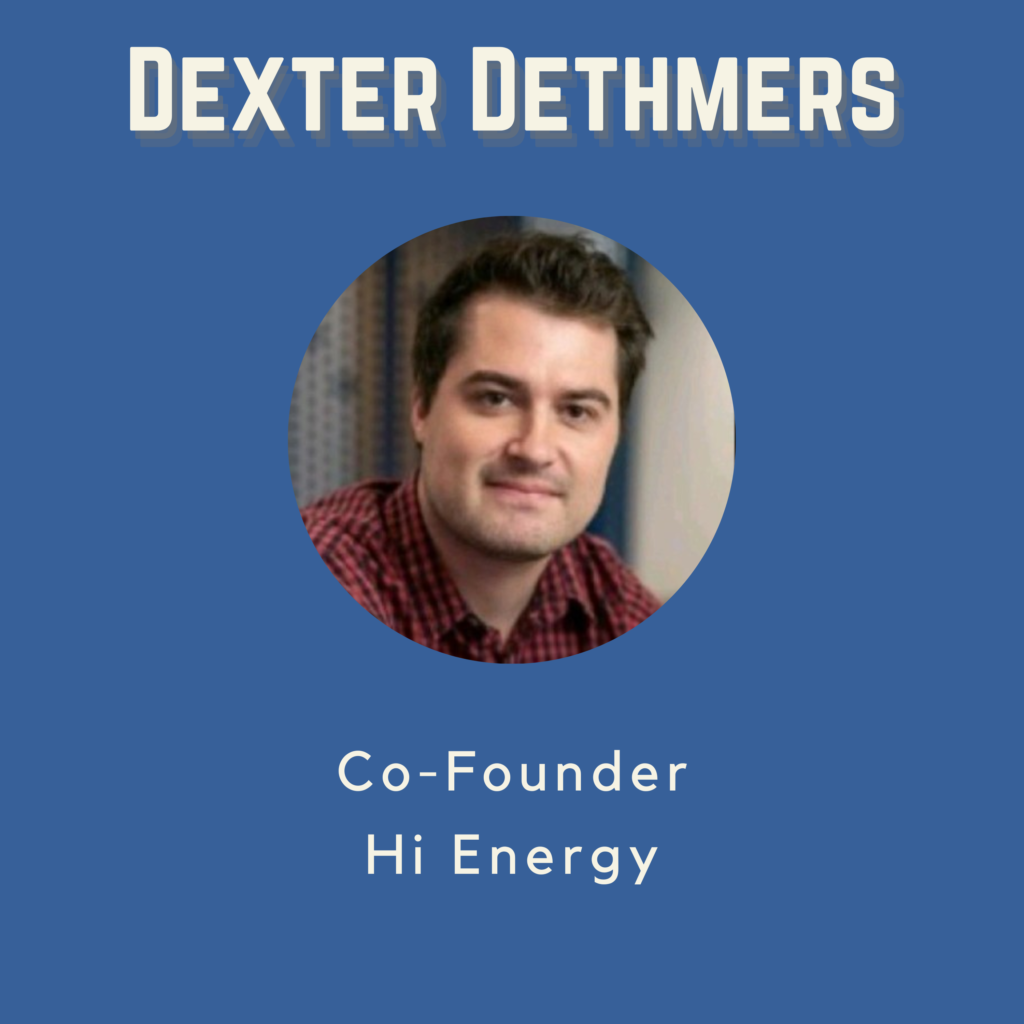
In this episode of Performance Marketing Spotlight, Dexter Dethmers, co-founder of Hi Energy, joins Marshall to discuss the biggest challenges and opportunities in affiliate marketing today—especially from the publisher perspective.
Dexter shares his journey from lead generation in Australia to running programs at CJ and Honey, and ultimately launching Hi Energy to solve the growing complexity in the affiliate ecosystem. He dives into how fragmented platforms, inefficient workflows, and outdated attribution models are holding publishers back—and how AI and automation can change that.
The conversation also explores affiliate marketing as a testing ground for brands, the rise of new discovery channels like Reddit and LLMs, and why the industry must evolve beyond last-click attribution. Dexter offers a candid look at what it’s like building a company, balancing product vision with market demands, and why the future of affiliate depends on empowering the next generation of publishers.
Amanda shares her career journey from getting her start at an affiliate marketing agency to spending nearly a decade managing the affiliate program at Macy’s, and now leading affiliate strategy for Tailored Brands. She discusses how the affiliate channel has evolved over the past two decades and what it takes to successfully manage performance partnerships inside a large retail organization.
The conversation covers how Tailored Brands has diversified its affiliate program beyond traditional deal partners, the growing importance of content and creator partnerships, and how AI and large language models are beginning to influence discovery, attribution, and brand visibility.
Key topics include:
• How affiliate programs operate inside major retail organizations
• Diversifying programs beyond deal and loyalty partners
• The growing role of creators and influencer partnerships
• Why affiliate marketing remains a low-risk, high-ROI growth channel
• How AI and LLM citations could reshape performance marketing attribution
• The importance of cross-team collaboration between affiliate, SEO, and social
This episode offers valuable insights for brands looking to modernize their affiliate programs and navigate the evolving performance marketing landscape.
About Our Guest
Dexter Dethmers is the co-founder of Hi Energy, a platform and services company built to help publishers simplify and scale their affiliate marketing efforts. With a career spanning CJ, Honey (acquired by PayPal), and multiple roles across the global affiliate ecosystem, Dexter brings deep experience from both the advertiser and publisher sides of the industry. At Hi Energy, he focuses on building AI-powered tools that streamline workflows, uncover partnership opportunities, and reduce the operational burden for publishers navigating a fragmented affiliate landscape.
Amanda began her career in affiliate marketing at an agency, where she built a strong foundation in performance marketing before transitioning to the brand side. She spent nearly nine years at Macy’s helping grow and optimize their affiliate program before moving to Tailored Brands, where she has focused on diversifying the company’s affiliate partnerships and expanding into content and creator-driven strategies.
Throughout her career, Amanda has been passionate about educating internal stakeholders on the value of affiliate marketing, driving incremental growth through strategic partnerships, and adapting programs to evolving industry trends such as AI-driven search, content commerce, and influencer marketing.
Transcript
Marshall Nyman [00:00:01]:
Hello and welcome to the Performance Marketing Spotlight. I’m your host, Marshall Nyman, founder and CEO of Nyman Co. Each episode, I will be bringing you someone with deep experience in the performance marketing space where they share their career journey and insights about the industry. Today I have Dexter Dethmers of High Energy. Welcome to the podcast, Dexter.
Dexter Dethmers [00:00:23]:
Hey, what’s up, Marshall? Happy to be here. Excited to talk to you.
Marshall Nyman [00:00:27]:
Excited to have you on and let’s just get right to it. Can you briefly introduce yourself to the audience?
Dexter Dethmers [00:00:33]:
Yeah. Hey everybody, my name is Dexter Dethmers. I’m co-founder of High Energy. I’ve been in the affiliate space for a long time. It’s pretty much the only thing I know. I’m like a one-trick pony. I started High Energy about 2 years ago with my co-founder, Jen Goodwin, to really help make publishers’ lives easier. We think Publishers have it rough in the affiliate space.
Dexter Dethmers [00:00:59]:
We feel like a lot of the tools and platforms that are out there have always been built for advertisers, and that’s created a really complex world for publishers to live in. And so we’ve built a lot of solutions and we have a ton of services to help publishers in the ecosystem monetize their platform faster and make their life easier.
Marshall Nyman [00:01:21]:
And how did you get your start in the affiliate marketing space?
Dexter Dethmers [00:01:23]:
Yeah, so I actually started in the affiliate space down under in Australia. So I started working for a lead generation company called Cohort Digital, and we used to do post-transactional surveys. In fact, we did post-transactional surveys before Rockt was doing post-transactional advertising. They ultimately really like pioneer— well, we pioneered the space, but they definitely grew it quite a bit. And so my job was to find advertisers in the affiliate space who would be willing to do more lead gen style with exit traffic or post-transactional traffic through surveys. So that’s actually where I started. I was there for a few years and we used to buy a lot of traffic from this company called CJ, which was based in the US. I originally lived in the US and my wife and I wanted to move back, so I thought, “Wow, wouldn’t it be cool to work at CJ?” because I was already working with them at my current company.
Dexter Dethmers [00:02:38]:
Yeah, that was when I started really working in the affiliate space, more on the lead gen side though. Not so much on the sort of traditional CPA affiliate side.
Marshall Nyman [00:02:51]:
And what were you doing at CJ? What was your role there?
Dexter Dethmers [00:02:53]:
Yeah. So at CJ, I was running advertiser affiliate programs. So I started off as an account manager and then kind of worked my way up to account director. I actually— fun fact about me at CJ is I worked at almost every single office at CJ with the exception of Chicago and Atlanta. So I worked out of the New York office. The Westlake office, the Santa Barbara office, and the San Francisco office. So I was bouncing all over the place with CJ and it was great. I met a lot of great people, learned a ton about affiliate marketing through working with big advertisers like Lowe’s, Citibank.
Dexter Dethmers [00:03:33]:
We used to run their credit card program. And yeah, that’s really where I sort of sunk my teeth into the traditional affiliate space. Then from there, I met these two really cool people, Chris Aragon and Steph— well, her name’s Steph Kelly now, but Steph Krim at the time, and they asked me to join the team at Honey. So I was at Honey for a while, which was acquired by PayPal, and then yeah, Jen and I met at Honey and that’s when we decided to start our own venture after our time at PayPal.
Marshall Nyman [00:04:08]:
[Speaker:TREY_LOCKERBIE] So what was really the bonus for starting the business?
Dexter Dethmers [00:04:11]:
[Speaker:RYAN_CALLIS] It was really just about the problems that we were seeing in the affiliate space from a publisher perspective. I think working on the publisher side, there’s so many inefficiencies because the affiliate space is so fragmented. You have advertisers on Awin, Impact, CJ, AvantLink, Pepperjam, Partnerize, ShareASale. So you have all of these disparate networks that you have to interact with and interface with. So much data that you have to normalize and figure out. So we thought there was a better way of doing things and we had a lot of knowledge and expertise, so we thought that was a good problem to solve and go after. So that was the impetus for starting the company was like, there’s got to be a better way for publishers. And that’s really how High Energy was born.
Marshall Nyman [00:04:59]:
And so tell us a little bit more. What is High Energy?
Dexter Dethmers [00:05:02]:
Yeah, so High Energy is a platform and services to help publishers grow within the affiliate space. So our platform pulls in your data from every network you can possibly think of, and then we enrich that with contact information and we keep track of your approvals, declines, build workflows around all of that to help you like scale your affiliate program a lot faster. Our, our platform also uses a ton of AI to surface opportunities for new partnerships, opportunities for commission increases, so that it’s not as unwieldy as it used to be. You used to have to log into each network and see which brands you got approved to and declined to, log into each network to check your program terms. HighEnergy automates all of that. It puts it all into one platform so you can manage your entire affiliate program as a publisher through one platform versus having to log in and out of 12 different networks. The benefits of that is because we normalize all the affiliate data and put it into one place, we’re able to use a ton of AI and machine learning to basically tell you what to do next. Tell you the programs that you need to be getting approved to, tell you the programs that you need to be getting commission increases from, so that at least as a partnerships team, you used to have to pull so many spreadsheets and things just to figure out, “Okay, where is my next opportunity? Where should I look for a new partnership? Where should I try and push for a higher rate?” So with high-energy, all that legwork is automated so that you can focus more on what matters.
Dexter Dethmers [00:06:40]:
You and I both know, Marshall, this industry is all about relationships. So the less time you spend analyzing data and trying to package data up to figure out what to do next, the more time you can spend actually working with partners, strategizing, and building new relationships and deepening your existing relationships. So it gives partnerships teams the time and energy to focus on what really matters, which is saying hi and meeting new people and building those relationships. So, yeah.
Marshall Nyman [00:07:15]:
As one of the co-founders of the company, what are you doing in your role?
Dexter Dethmers [00:07:18]:
Oh, my gosh. So Jen and I are very complementary of each other because Jen is definitely the extrovert. Of the group. If I’m sure, Marshall, you’ve met Jen, you know, she’s very bubbly, very friendly. She’s also, of all the people I’ve worked with, probably the best at maintaining relationships with people. She’s constantly talking to everybody in the industry. She’s keeping up with people. So she really focuses on our agency side of the business, which is like our white glove service where We basically run your affiliate program from start to finish.
Dexter Dethmers [00:08:00]:
A lot of publishers hire us to basically do all of their sales, all their outreach, maintain their inbox, build strategic partnerships. So Jen and her team focus really heavily on building out that side of the business and making sure that our clients are super happy with the service that they’re getting. And then my role is more, I’m kind of like a middleman. So I help with strategy and execution on the agency side of the business, but I’m really focused on building out our platform to really scale up and put in a bottle a lot of the great stuff that we do on the agency side and figure out how to package that up into our platform so that we can deliver it to hundreds of publishers as opposed to just a handful of publishers that we can realistically give great white glove service to. And so most of the time I spend my day doing a lot of the boring stuff, like the finance stuff, the invoicing stuff, the tax stuff, which is super fun. But then I spend a ton of time with our engineering team, We now actually have 3 engineers, which is really exciting. So we have our CTO, Patrick, and then we have a bunch of engineers that sit in New York with him, and we really just work on new features that we’re building out, figuring out ways to scale our platform. So I spend a lot of time there, and then I spend a ton of time on talking to new publishers and evangelizing our product.
Dexter Dethmers [00:09:40]:
So I, yeah, I spend, I wear a ton of different hats, but lately I would say I’ve been spending a lot of my time talking to publishers that we’re not working yet with yet and just sharing all of the cool stuff that we’re building to see if we can create some great solutions for them and help them along their journey in affiliate.
Marshall Nyman [00:09:59]:
Sounds like the life of an entrepreneur.
Dexter Dethmers [00:10:01]:
Yeah, it’s chaotic, right? Like you, You know, you really do have to wear a lot of different hats. You have to do a lot of different things. And I think one of the biggest things that I’ve figured out about being a co-founder of a business is you have to be comfortable doing things you’ve never done before and be ready to learn and be really good at learning, which means like listening to customers, being willing to fail and understanding how to learn and fix and improve upon yourself, upon your platform so that you can give better solutions later on. So yeah, it’s fun, man. You’re doing all kinds of things as a founder of a business, which you know very well.
Marshall Nyman [00:10:47]:
So any product updates that you envision down the road?
Dexter Dethmers [00:10:51]:
Yeah. So on the product side, I think AI is like a hot topic, right, for everybody. And so we’ve been using AI from the very beginning. Been using AI really heavily for data enrichment and data normalization. I think AI has traditionally been really good at that, but of late, AI has gotten a lot better. I think really the game changer for me with AI was, yeah, it was really good for data normalization, data enrichment, but when Anthropic came out with Opus 4.5, which I think came out in November, which is pretty much known as Claude Code. That’s really what was a game changer for me and how we use AI as a part of our business. And so a lot of new products that we’re going to be rolling out are going to be a lot more around leveraging some of these newer, more powerful models to do a lot more delivering of information and executing on workflows.
Dexter Dethmers [00:11:55]:
That traditionally would’ve taken, even if you’re using our dashboard and running our exports, would’ve taken a lot of time to pull the data, get it into a format that you like, and then get the contacts that you need to send emails out to partners that you want to partner with. So the new products that are coming out is we have a ChatGPT app that’s coming out. We have a Slack app that’s coming out, and all of those things are going to allow you to interface with our data using natural language. And then execute on workflows using natural language as well. So just to give you an example of what that looks like, you can say, hey, who are the top 5 brands that I’m not partnered with yet? And our AI will go and it’ll find you a summary of the top 5 brands. And you say, great, I want to send an email getting them to partner with me as a publisher to these top 5 brands. It’ll know all the contextual relevancy of you as a publisher and it’ll send those emails out for you. So that’s really like the biggest product that’s coming out in the next, that we’re really focused on is our ChatGPT app and our Slack app that are all powered by these really powerful new models that are going to be able to do tons of data analysis, but also execute on workflows that have previously been been done by humans.
Dexter Dethmers [00:13:15]:
So yeah, that’s what we’re super pumped about.
Marshall Nyman [00:13:18]:
What’s been your favorite part of starting High Energy?
Dexter Dethmers [00:13:21]:
I think my favorite part is being able to dictate and work on things that I want to work on. So I think in the past, when you’re at a role at a company, you really have to focus on— you kind of get this very specific, like, hey, this is your area, this is what you focus on. And then you run into all of these fences all the time. Being at a big large Fortune 500 company, what winds up happening is you’ll start to execute on something, you’ll get really excited about something that you can build, and then you’ll have to go to this person or that person and there’ll be security roadblocks, compliance roadblocks. Oh, we need to escalate this to a VP before we can sign off on it. And everything slows to a crawl. And what winds up happening is you don’t really get to execute on the vision of what you really want to do. Whereas if you’re a founder of a company, the world is your oyster.
Dexter Dethmers [00:14:14]:
You can take a product or a project in whatever direction you want. I think I really love that freedom of being able to follow my own intuition. I think especially when you’re founding a business with a co-founder, it’s important that you— and it’s been really helpful for me, honestly, to be able to check in with somebody and do sanity checks like, hey, This is kind of what I’m thinking. Am I going off the deep end here? And then it’s been great partnering with Jen because she’s like, no, no, no. Yeah, we should definitely do that. Or she’ll be like, I think you’re going a little crazy with this one thing. So you kind of have a partner who can rein you in if that needs to happen or push you forward and say, yeah, you’re on the right track. Keep going.
Dexter Dethmers [00:15:02]:
Don’t worry. Figure this out. So I think having that autonomy and that flexibility to just kind of go any direction you want has been my favorite part of starting my own business. I do think it’s a little bit of a double-edged sword though, because I’m somebody who’s like high in openness and high in curiosity. You do have to be careful that like you don’t let your curiosity get the best of you. You do also have to focus on like what your clients want. Don’t get me wrong. I think one of the things I learned about starting my own business is you think you don’t have a boss, you do.
Dexter Dethmers [00:15:39]:
Your clients are your bosses. You go from having one boss to 10, 20, 30, 40, 50 bosses because your clients are who you’re ultimately delivering your work to, and the users of your platform are ultimately going to dictate what they will pay for and what they will not. So the market becomes your boss. And so I think you have to find a way of balancing that creative freedom and the ability to take your business any direction you want to take it with the fact that you do have one constraint, which is you need to win the market and you need to win business. And so in order to do that, you have to rein in your curiosity and your openness to focus really on solving the right problems for your clients and for your customers. And the market decides, right? Like the market decides if what you’re building is valuable or not. So listening to the market, the market becomes your boss, basically.
Marshall Nyman [00:16:38]:
Any events or conferences you’re planning on attending this year?
Dexter Dethmers [00:16:41]:
Yeah. So I think we’re going to be at AWIN Think Tank in Chicago. So I’m pretty excited about that. We’ll be at the Rakuten conference. As well. So those are the two big upcoming ones that we’ll be at. Um, pretty pumped to go and also pretty pumped to hang out with you too, Marshall, um, and see you there. But yeah, I mean, we try and hit like every conference for the most part, with, uh, with a couple exceptions.
Dexter Dethmers [00:17:11]:
There are a few that we are like, eh, not super interested in attending, but for the most part, all the major ones we try and hit.
Marshall Nyman [00:17:17]:
We’ll definitely be at those two and looking forward to catching up in person.
Dexter Dethmers [00:17:22]:
Yeah.
Marshall Nyman [00:17:23]:
So switching gears a little bit, why do you think a brand should get started in affiliate marketing?
Dexter Dethmers [00:17:27]:
So I think for brands, affiliate marketing is like the ultimate testbed for what types of marketing work for you, right? Affiliate marketing is, I believe, like a very freeform, like a freeform channel. So within affiliate marketing, you can find all different types of publishers, right? You can find your traditional coupon and loyalty publishers. You can find editorial content sites. You can find new platforms and tools that are being built. So it gives you the opportunity to test a lot of micro channels within one channel. I think there’s a lot of innovation that happens too at the startup level that’s born out of affiliate marketing. There’s a lot of great startups that use affiliate marketing to monetize their platform. A great example of this to me would be Doop.com.
Dexter Dethmers [00:18:15]:
So Doop.com is one of our clients and they do visual— they’re basically like a visual search and generative marketplace. So you take a picture of a product or you put a link in for a product and it’ll show you similar products that aesthetically are similar. Right. So they’ll run the picture of the product through an image comparison engine and they’ll find similar looking products. But because they’re so well versed in AI, they’re now able to do a ton of analysis on the product that you’re looking at in real time. So Being able to find partners like that that are truly at the cutting edge of the discovery and consideration phase of the consumer journey is really unique. When you’re a brand and you’re starting out your marketing strategy, you basically have a couple different routes you can go. Let’s say you’re a D2C brand that’s Shopify-based.
Dexter Dethmers [00:19:06]:
You can spend a ton of money on Meta and Google and the like social platforms, you can do paid search, but all those things cost a ton of money upfront. Performance isn’t guaranteed, but what affiliate marketing gives you the ability to do is set that bounty of, hey, I’m willing to pay 10% or 15% of my total sale amount to try and get some more sales in the door. And you’re basically able to seed your offer and see what plants grow. Is your product really well suited for editorial content? Is your product really well suited for like paid search and SEO? Will your product get picked up by influencers and creators? Like you can actually test a ton of that stuff through the affiliate ecosystem. And so not only can you drive sales and volume, but you can also learn a lot about what your customer journey looks like and how you can apply that to other paid channels that you’re currently going after. Like another cool channel that’s just sort of popped up in the affiliate industry is like talking to some folks that are doing like Reddit seeding, like Reddit content seeding. And that’s like something really niche and unique that you’d either have to find an agency that does that and pay tons in flat fee, or you could get picked up by a publisher that’s doing it already in Reddit on a CPA basis. And if it’s a really powerful channel for you, then you know, okay, I need to double down on my Reddit strategy.
Dexter Dethmers [00:20:27]:
Reddit, Quora, YouTube are all being highly regarded when LLMs are doing their training and they’re giving responses back to you. So not only are you getting a bump in sales from direct Reddit users, but you’re also getting like this K-factor bump of like additional context that’s being added to LLM responses. And so you’re getting, you know, more sales and visibility that way too. So I think affiliate opens up opportunities in like a bunch of different areas that you wouldn’t traditionally think about when you’re starting your marketing strategy.
Marshall Nyman [00:20:58]:
What are some challenges you think the industry needs to tackle?
Dexter Dethmers [00:21:00]:
There’s two big ones. I think for us, like we believe that the biggest challenge in affiliate right now is how complex and difficult it is to build a business around affiliate as a publisher. I think if the affiliate industry was better at cultivating new publishers, giving them better tools, giving them better training, and there are more tools that made it less of a labor-intensive channel for publishers to make money off of, it would actually grow the amount of publishers in the ecosystem, and it would also strengthen the diversity of publishers that are in the ecosystem as well. So I think that’s, for me, from my perspective and where I’m sitting, I think that’s the number one problem. If you consistently are relying on the same coupon loyalty, and even to a certain extent content sites to drive all the traffic for your affiliate program, over time those publishers will decay. And if you’re not constantly giving the tools and resources to new publishers and new models to come into the space and monetize their platform, the affiliate channel will die. It depends on new publisher blood coming into the ecosystem. So I think that’s the number one problem.
Dexter Dethmers [00:22:06]:
The second problem I think the channel is going to face over the next 18 months is more attribution related. I think the attribution infrastructure in affiliate is, it hasn’t really changed in a really long time. And a lot of people talk about this, right? It’s all last-click attribution for the most part. There’s some disparate networks again that are like, “Oh, we have first-click and soft-click and all these other options.” But the reality is publishers don’t know about any of those things. They’re working at a scale and volume where, “Oh, this is a soft-click.” They don’t know the difference, right? So they’re promoting these brands the same way they always have. And I think with the introduction of LLMs into the customer journey, like people going to ChatGPT before they make a purchase and using it for analysis and evaluation, the model is going to need to— like, the attribution incentives are going to have to change from who attributed the sale directly to what content and learnings that the LLM used to give you that response drove that sale. I think that’s like a real challenge that I don’t think I’m smart enough to figure out what the solution to that is. But I do see a world where big publishers like Forbes, Wirecutter, a lot of their content is being absorbed into LLM responses and might very well be influencing the decision for that customer to buy the product, but they’re not getting any credit because most people aren’t going to check all of the sources that the LLM used to then link them to the Wirecutter before they make their sale.
Dexter Dethmers [00:23:34]:
But the Wirecutter definitely had an influence on that sale. So how do you build an attribution model that gives the appropriate credit to the publisher for that? I think that’s a big challenge.
Marshall Nyman [00:23:43]:
I think you hit two of those points, like very, very important things. Definitely not enough new publishers coming into this space. And if there’s anything we can do on the innovation side, I think that’s a big opportunity. The more publishers, the more opportunities, like that’s why we’re limited in opportunities in the space because there’s only so many publishers. So I think that’s going to be a really, really big piece. And then on the attribution side, I think this is just something we just keep talking about. Over and over and over again. We have to get away from just giving one publisher credit per sale.
Marshall Nyman [00:24:15]:
There’s just too many touchpoints in a sale. And so I think everybody’s going to have to get together and say, how’s the best way to do this? But one partner isn’t touching a sale, so there’s got to be some sort of split attribution, and it can’t just be last click because that’s also creating a lot of problems for attribution in the industry. So—
Dexter Dethmers [00:24:33]:
And you know what I don’t think is going to— I’ve thought about this a lot and I’ve had conversations with people in the industry about this. Here’s what I don’t think is going to happen. are going to get together and agree on new attribution rules. That won’t happen. I don’t think some sort of pseudo-regulatory body or some sort of marketing organization is going to get together and create standards for the industry. If you look at any industry, those two things never work. I think the reality is there’s going to be an incumbent in the space that comes up with an attribution model that publishers find more valuable and people are going to go there, or one of the networks will come up with a model that works so well for advertisers and publishers that everybody else is going to be forced to basically copy their attribution model or they’re going to lose all of their publishers and advertisers. So I think the reality is you need some external party that creates so much disruption so fast that everybody else has to change, or somebody who’s an incumbent creates that disruption that everybody else has to follow along with.
Dexter Dethmers [00:25:32]:
I don’t think networks getting together and agreeing on attribution rules, I feel like that’s the biggest fairy tale I’ve ever heard. And it’s not because the networks aren’t great and smart, they are, but I just don’t think that’s— there’s no precedent for that ever happening in any industry. And these pseudo, like, sort of like governing bodies or organizations, you know, they don’t have the power to tell networks to go one way or the other. So.
Marshall Nyman [00:25:55]:
And final question, what’s been your favorite part of working in the performance marketing industry?
Dexter Dethmers [00:25:59]:
I think the answer that most people want to hear is the people. And I do think that that’s been a great part, but I think there’s great people in every industry. And I think like People are great. Like, I think my favorite part about the performance marketing industry is the craftiness, the hackiness, the innovation that comes out of trying to figure out how to win in an attribution model. I think like you create a set of rules and then you like tell a bunch of publishers, okay, go and figure out how to win in these rules. And you’re gonna come up with all these like cool innovative solutions to winning the sale. And some of that stuff like people may not like, Some of that stuff people might like, but I think that’s the beautiful part about it. It’s like you, you watch all of these different people trying to innovate around these rules and come up with like super unique solutions.
Dexter Dethmers [00:26:46]:
So that’s my favorite part. And of course I love the people, but I feel like that’s such a boring response. So I want to say something a little different.
Marshall Nyman [00:26:55]:
Appreciate that. Well, a big thank you to Dexter for joining our podcast this week. Some great insights into his background and then his role at High Energy. What’s the best way for listeners to connect with you?
Dexter Dethmers [00:27:06]:
Yeah, you can reach out to me at dexter@highenergyagency.com, or you can hit me up on LinkedIn, Dexter Dethmers, send me a DM. But yeah, Marshall, thank you so much for having me on the podcast. I really appreciate it.
Marshall Nyman [00:27:20]:
Again, thank you, Dexter, for joining us and to our producer, Leon Sonken. If you’ve enjoyed this content, please give us a like and follow. Thank you for listening in. I’m Marshall Nyman, host of the Performance Marketing Spotlight. And founder and CEO of Naimo Co, signing off. Thank you and have a great day.