
Summary
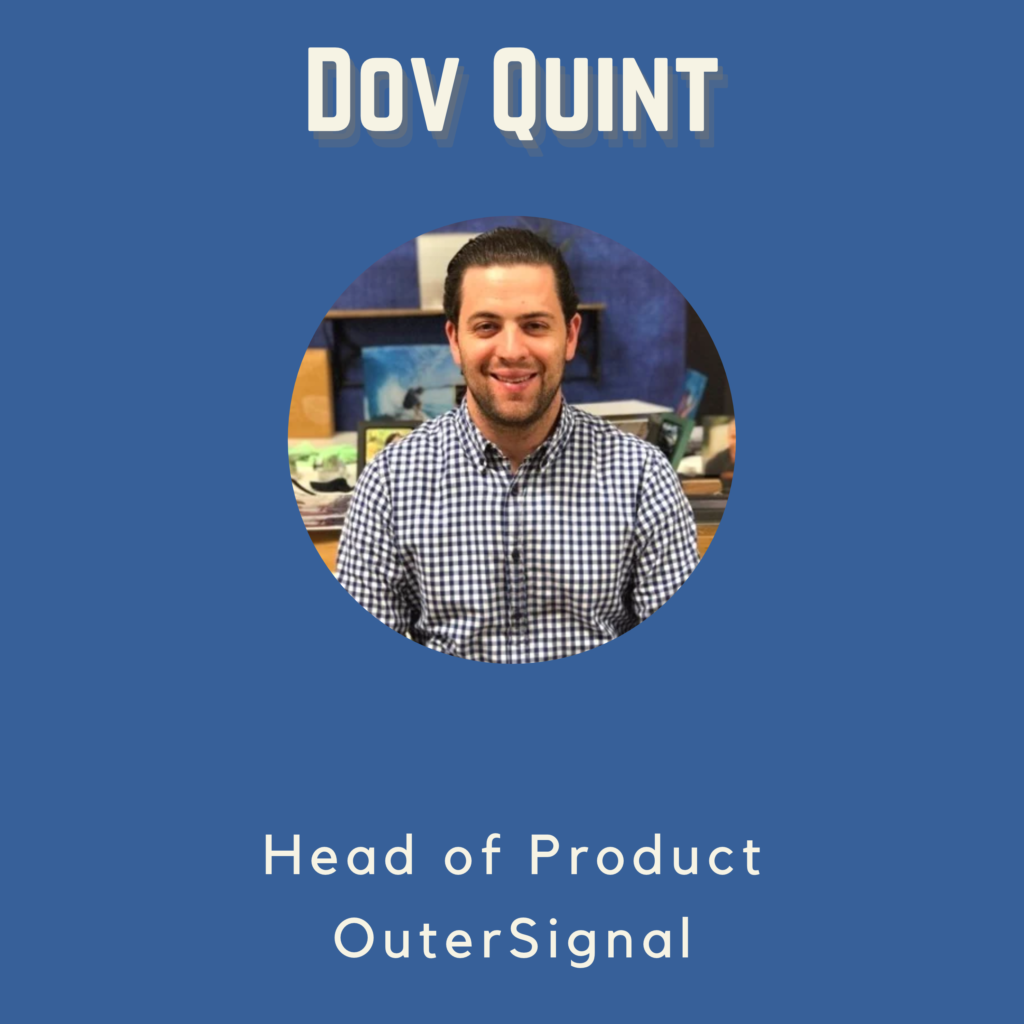
In Episode 67 of Performance Marketing Spotlight, Marshall Nyman sits down with Dov Quint, Head of Product at OuterSignal, to discuss his journey through e-commerce entrepreneurship, building and scaling online brands, and how AI-powered customer intelligence is creating new opportunities for marketers.
Dov shares how he got his start in e-commerce with Polaroid Photo Bar and MyPhoto, navigated the challenges of building a retail and online business, and later joined OpenStore, a Shopify brand aggregator that managed a portfolio of 50 brands. He explains how those experiences eventually led him to OuterSignal, where he’s helping brands better understand who their customers are beyond traditional transactional data.
The conversation explores how AI-powered customer enrichment can uncover valuable insights about shoppers, identify influencers and strategic partnership opportunities, and help brands personalize their acquisition and retention marketing. Dov also discusses the rapid pace of AI-driven product development, the importance of maintaining human judgment when building with AI, and how e-commerce brands can make better use of their customer data during critical shopping periods like Black Friday and Cyber Monday.
Whether you’re an e-commerce operator, performance marketer, agency leader, or brand looking to improve customer relationships and unlock new growth opportunities, this episode offers practical insights into the evolving role of AI, customer intelligence, and personalization.
Topics discussed include:
Dov’s journey from entrepreneurship into e-commerce and technology
Building Polaroid Photo Bar and scaling MyPhoto
Lessons from managing a portfolio of Shopify brands at OpenStore
The importance of networking and adapting as an entrepreneur
How OuterSignal uses AI to enrich customer profiles
Identifying influencers, VIP customers, and strategic partnership opportunities
Using customer intelligence to improve acquisition and retention marketing
The impact of AI agents on product development and business operations
Personalization strategies for Black Friday, Cyber Monday, and beyond
The future of AI-powered customer intelligence in e-commerce
About Our Guest
Dov Quint is Head of Product at OuterSignal, an AI-powered customer enrichment platform that helps e-commerce brands better understand their customers and uncover opportunities for growth, personalization, and retention.
With more than 15 years of experience in e-commerce and entrepreneurship, Dov began his career helping build Polaroid Photo Bar, a custom photo retail business that later evolved into MyPhoto. He subsequently joined OpenStore, a venture-backed Shopify brand aggregator, where he helped manage and optimize a portfolio of online stores.
At Outer Signal, Dov draws on his extensive experience operating e-commerce businesses to bridge the gap between customer needs and product development. His work focuses on helping brands leverage publicly available customer intelligence, identify valuable relationships within their existing customer base, and use AI-driven insights to improve marketing performance and customer engagement.
Transcript
Marshall Nyman: 00:01
Hello, and welcome to the performance marketing spotlight. I’m your host, Marshall Nyman, founder and CEO of NIMO Co. Each episode, I bring you someone with deep experience in the performance marketing space where they share their career journey and insights about the industry. Today I have Dove Quint from Outer Signal. Welcome to the podcast, Dove.
Dov Quint: 00:19
Thanks, Marshall. Thanks for having me. Great to be here.
Marshall Nyman: 00:21
Excited to have you on. Let’s jump right to it. Could you briefly introduce yourself to the audience?
Dov Quint: 00:26
Sure. My name is Dove Quint. I’m the head of product at Outer Signal. It’s a recent move for me, which we can get a little bit more into as far as what I do on a day-to-day basis at Outer Signal. But I’ve been uh I’ve been around the e-commerce industry for close to 15 or more years now. I think I’ve lost count. I live in South Florida, proud father of three wonderful children. And that’s a little bit about me.
Marshall Nyman: 00:45
How did you get into the world of e-commerce?
Dov Quint: 00:47
That’s a great question. Well, how much time do you have? We can go way back. Um, the my my real introduction to e-commerce is actually through a family business that you know a little bit about. My uh wife’s uh father, so my father-in-law and uh his brother uh have been serial entrepreneurs for many years. And um, back in 2012, basically we we started a uh custom photo business that was helping folks turn their digital photos into physical photo products. And so, you know, this was a couple years uh after the launch of Instagram, or maybe the same year as the launch of Instagram, maybe five years after the launch of the iPhone, and there was this uh societal obsession, as we like to say, with uh people taking photos, which now looking back even 14 years later is a in a whole other stratosphere. But back then it was sort of a novel new thing. And our concept was a physical retail destination where people would come and you know make something special um in a physical nature on all different types of substrates from acrylic to metal to glass, um, and then going home with it instantly. We actually, in the early days, we were licensing the Polaroid brand, if you remember, back in the day, Marshall. And um, at our peak, we had a bunch of stores, over 10 stores across the US. We built out a Polaroid Museum on the strip in Las Vegas, um, which was a crazy uh experience. So that was really my first entree into uh into e-commerce that lasted close to a decade through um a number of different iterations of that of that business. And I’ve done some interesting things uh since then as well. But that was the entry point.
Marshall Nyman: 02:08
And did that ultimately lead you to to my photo from there? Well,
Dov Quint: 02:11
that was that was my photo. So Polaroid was yeah, so Polaroid Photo Bar was the original iteration of that business. And then um, you know, we we we stopped licensing the Polaroid brand at a certain point and then rebranded to my photo and um really got out of uh physical retail and focused more on the digital space. And that was um, you know, that was a a period of uh uh of uh a number of years where that happened through COVID and lots of you know, lots of uh twists and turns of the startup life for sure. Um that really gave me a taste of what building a business on the internet is all about.
Marshall Nyman: 02:41
A lot of iterations. Oh
Dov Quint: 02:42
yeah, like true entrepreneurs, you gotta pivot when uh, you know, when when you see things and you get feedback from the market about what is or isn’t working, right? That’s for an entrepreneur, for a business person, that’s that’s gold. That’s the stuff that you gotta pay the closest attention to and and listen and act uh decisively based on what you’re what you’re seeing. So there was a lot of a lot of that, a lot of pivoting and a lot of iteration for sure.
Marshall Nyman: 03:02
And then the next thing you know, you’re at OpenStore.
Dov Quint: 03:04
Yeah, so you know, I I um, you know, like I said, I I was at my photo through uh through COVID, and that was very interesting because we were we were we were not outsourcing um uh manufacturing, we were manufacturing everything um in-house, end-to-end. And so, you know, uh if we if we couldn’t continue to produce during that time, you know, our business would have been in real trouble. And so, you know, we were we were you know, we were definitely um shortening shifts and had a lot of precautionary measures in place during that period of time. Crazy to think it’s it’s more than six years ago now. But um, you know, spent another couple of years through COVID. Um and then, yeah, in 2022, I left to go to Open Store. Open Store was a uh a venture-backed e-commerce uh Shopify aggregator. This is back in the in the heyday of of aggregators. Not not, you know, we were we were in the Shopify space. We were not in Amazon, which was really, really had a lot of examples and stories uh, you know, around different folks who tried to make that work on Amazon. We were doing it in Shopify, which of course broadly has similarities, but I think fundamentally had uh you know had had real practical differences. And um, so based in Miami, our CEO Keith Raboy came from uh the Bay Area, uh a widely known adventure capitalist. And uh that was at a time where he wanted to build the Miami scene. That was part of his entire entire concept of starting this business and coming down here. And the basic premise of that business was, you know, was trying to essentially offer instant liquidity for Shopify merchants for their stores that they were were building. And so we were, you know, making offers in you know, in days um very quickly, looking at a at a business’s uh financials and some other metrics. And then and and essentially we were then, like I said, offering them you know an opportunity to exit and to um and to make some money. And the concept for us was that we were going to, you know, we were going to aggregate these merchants’ stores under one portfolio and get all the economies of scale that you would hope or expect to get from from doing something like this. Uh, I think that there were um, not I think, I know, uh, because I lived it over a period of uh three and a half, four years. There were a lot of challenges. And and fascinatingly, in a short period of time, with with what’s gone on with AI over the last year or year and 18 months alone, um, I think that uh, you know, that that business could have ended up very differently. But like a lot of things in life, timing is very important. And so um at our peak, we had 50 brands in the portfolio, but uh middle of the last year, the majority of them were wound down. There’s one brand actually, which was which was our our um certainly our biggest success story, which is a Men’s of Power brand called Jack Archer, which still is uh functioning and running and and growing today on its own. It sort of is the is the last standing child under a separate entity entity of that uh of that business, but learned a ton through that experience as well, you know, about a lot of things about you know, again, running an online business and uh managing lots of uh stores at scale. So that was about a three and a half year period, which brought me to the last year, to about last uh October and Outer Signal, where I’ve been for the last year.
Marshall Nyman: 05:58
And how did you land at Outer Signal? How
Dov Quint: 06:00
did I land at Outer Signal? Well, I would say for anybody listening to this, that’s it’s a it’s a good, um, a good story as it relates to uh the value of uh of networking and just trying to pay it forward and um leaning into that part of being in business. It’s something that for a long time I did not like and did not pay much attention to or invest much of my time in. But at a certain point, uh probably around when I joined OpenStore, that started to change for me. And um, through somebody that I, through a vendor actually, who became a friend, a guy by the name of Ben Sharf, who was running a company called Platter in the Shopify uh partner and app ecosystem, he introduced me to Outer Signal CEO, Zach Zellner, um, around last June. And at that point, Outer Signal was uh was a fun side project for Zach, um, who was running his own brand and has been an entrepreneur in his own right for a bunch of years with a lot of successes. And he was building something. This was, you know, when I referred to earlier what’s happened over the last 18 months with AI specifically, this is sort of at the beginning of that period where he um he he wanted something for his own business. He wanted this tool to answer a simple question for him for his own business, and he started to build it. And um, Ben introduced me to Zach. We started chatting last summer um and fell in like, and um, you know, as the months went on and as outer signal became an actual business and started having more customers, Zach asked me to join. And uh it’s been a wild ride in the last uh 14 months, that’s for sure.
Marshall Nyman: 07:20
Tell us what is outer signal?
Dov Quint: 07:21
Outer, I’m doing a lot of the talking here, but I guess that’s the point, right? Um, Outer Signal is um it’s an agentic customer enrichment platform. So those are a nice, nice bunch of fancy buzzwords. But essentially what Outer Signal is doing is it’s telling you everything you would want to know about who your customer is that is buying from your online store. So, you know, somebody comes to your website and they check out, they fill out a bunch of transactional information for their purchase to complete their purchase, right? So you get things obviously like name, email, phone number, billing and shipping address. Um, as the brand, you obviously know the SKUs that they bought and what they buy over time and how often they buy. You also obviously, you know, if you if you if you’re know what you’re doing and you’re set up correctly, you understand, you know, where they were sourced from, you understand, you know, what what emails they clicked on. There’s all the zero party data that brands collect. You do surveys, you do quizzes, um, there’s there’s reviews, there’s a lot of things, but you don’t really understand like who the person actually is. What are their interests, what’s their, what’s some other relevant demographic and psychographic information related to who they are, which if you knew, would really, really help you a lot in a lot of different areas of your business. So the analogy that we use is it’s like having a team of overcaffeinated interns whose sole job is to Google every customer and find out as much as you possibly can about that person, right? And so that’s that’s a it’s a it’s a massive oversimplification, but stick with it just for um the purposes of of me explaining the the core uh premise of what we’re doing. So as soon as somebody buys on your site, we go out to the internet to all publicly available data sources, and we we build this highly enriched profile. So you you get things like age, gender, birthday, month, and year, job title, property value of the home that you live in, links to social media profiles where you went to school, where you work, where you’ve worked, all these amazing, interesting, rich pieces of information. Because whether any of us like it or not, there’s just a ton of stuff out there on the internet about all of us. And and of course, to different people to varying degrees, right? If you’re not as much of a public person and don’t have as much out there, then you know that there won’t be as much on you. But even for those people, there is a minimum amount of information that’s very useful. And so we we basically compile all this into these uh highly enriched profiles of every single one of your customers. Now that’s incredible and great on its own, on its own, right? But the natural next question is, okay, amazing. So now I have this profile about this person, and I know I know Dove is 39 and he lives in Hollywood, Florida, and he’s got three kids and he works at a company called Outer Signal, um, and he’s worked at a company called Open Store and my photo before that. But what do I do with all that? Like, why is that? It’s nice to look at on a on a bio on a profile, but how am I going to use that to benefit my business? And so this is really where a lot of the what we what we refer to as the action layer comes into play. And the way that I like to think about it, Marshall, is there’s two categories of opportunity that exist with this information that Outer Signal is surfacing for you. One is on the strategic side. You know, if you want to know, and this was actually the original question that Zach was trying to answer when he started the business for his brand, was who exists within my customer base that I can extract value out of in some way, right? Like in a in a meaningful fashion, right? Who are the VIPs? Who are the celebrities? Do I have any athletes? Do I have any influencers? Do I have any B2B opportunities for my business? Maybe potential investors. There’s all these different strategic, you know, ways to improve your business and to benefit your business. And, you know, if you have people that already bought your product, swipe their credit card with you and, you know, and and presumably had a good experience, um, those are people that you want to reach out to, right? So, like the influencer one is a great example, right? Like, sure, there’s a lot of sourcing you can do for influencers for your business that are that that are prospects that you find on a marketplace that, you know, most likely never bought from you. Maybe they never even heard of you, and you have to sell them on why they should be be creating content for you or doing influencing for you. Versus we can surface for you people that actually have bought from you. They gave you their money. They uh they they they have your product already, right? So that’s incredibly valuable. B2B opportunities. Uh, you know, we we’ve had we’ve had folks on the platform who have identified uh a buyer at Target that bought the product personally. For what reason? Not sure exactly. Maybe they were thinking already about their day job, maybe they were just for their personal use. But now that you have that you’re on with that information, you can reach out to that person, develop a relationship. And in in a number of cases with brands that are customers of ours, they they ended up speeding up the process of being able to get their item on the shelf in a in a big box retailer. Another example that’s a fun one that we talk about is there’s a brand on the platform called Magic Mind that identified that Kim Kardashian had been buying from them. And they had no idea that she had been buying for over two years and um sent her a care package with a handwritten note from the CEO. And two days later she posted a story on her on Instagram, right? And they didn’t ask or anything like that, but it was a huge boon for the business. So there is this category of strategic opportunities that exist that are very valuable. Um, but I would argue actually that the long tail of everybody else, the doves of the world, like I like to say the non-influencers or VIPs, right? Where you can um basically uh personalize your retention marketing, create lookalike audiences for your acquisition marketing, because what we do is we create these personas and then armed with of for each customer, and then armed with this information, you can use that to personalize the content in email, in direct mail, um, you know, in in on acquisition channels like Meta and otherwise. So lots of really cool, uh exciting ways to enhance and optimize your business through the data that we’re servicing.
Marshall Nyman: 12:23
When everything was brick and mortar, the person at the cash register knew everything about the customers. Now you don’t have that human interaction when someone buys online. So it’s almost like you’re putting somebody behind the register so you actually know who your customers are, and then you can engage with them differently because your customers are your best people to promote the product.
Dov Quint: 12:41
You nail that you nail that that is exactly um exactly what we are doing in a way for sure. No question, where you had this personal relationship with each individual customer.
Marshall Nyman: 12:49
So what is your role at Outer Signal and what are you focused on there?
Dov Quint: 12:52
Yeah, so as I referenced earlier, um, you know, like in many startups, you know, you you you need to have the attitude uh in the early days that you’re gonna do whatever it takes. And and I think I’m proud of the fact that I think um, you know, in this case, I’ve worn a number of different hats in a short period of time. So when I first joined, I I was involved in in ops. I mean, this was at a time where there were three people, four people in the company. So, you know, it was you, I was doing a little bit of everything. Then uh that transitioned to a period where I was uh running CX. Um so that lasted for a period of time. Then we made uh an acquisition over the summer um of another platform. And so I was then uh managing that integration. And then um over the last couple months, I I’ve been really focused on product and it’s been pretty exciting because I mean, I have no I have no experience running product at a uh you know at a at a software company. This is my first experience at a software company, period. So I certainly don’t have any experience running product, but I think given my experience on the brand side and a lot of the things I was involved in previously in my career, specifically at OpenStore is an example where um where I uh you know, where I was overseeing storefronts, which was basically anything related to the front end of the 50 brands that we were managing. So managing the tech stack and all the all the you know um optimizations and enhancements that we would that we would make on the front end of our of our uh you know of our shops. A lot of those uh experiences there, plus just being on the brand side and understanding what brands want in a software product, what they prioritize, what they want to see, um, has positioned me in a really uh unique place sitting between our customers and our engineering team who are incredibly, incredibly talented, but maybe don’t have a ton of experience on the brand side. So I can give them some of that insight. And like I said, just the velocity with which we’re able to ship things in this AI, in this agentic world is is just mind-boggling. So, you know, we we’ve been shipping, we’ve been shipping a lot like a serious launch, one launch a week at minimum over the last, you know, six, eight weeks. And um, it’s a it’s a velocity that we don’t have any intention on slowing down on. It’s it’s something that we take pride in, continue to find ways to to give value to our customers.
Marshall Nyman: 14:53
It’s insane the pace of everything right now. Things are just moving so quickly. Before it took years to get things done, and now it’s you know, let’s get something done in a couple weeks. And you’re like, how could we have done that a few years ago? It would have been impossible.
Dov Quint: 15:06
Weeks, man. Weeks is slow, days. It’s it’s a it’s a new frontier. I mean, literally going from you know, from the the seed of an idea to you know a a product launch within days. It’s it’s it’s wild.
Marshall Nyman: 15:19
Yeah, you have an idea, you can kind of plant it into the the AI tool, and then whatever you’re working on, you can just kind of go back to it and and and stay focused on whatever you’re doing, and then an hour later you can kind of see what that idea started to turn into, and then just run with it from there. You know, it’s it’s really amazing how much you can change your workflow and and how many things that you know you were so used to doing that are now something that you could pass off and have done in a few seconds.
Dov Quint: 15:42
Yeah, you’ve got a you’ve got an army of employees like to an extent with these agents. Um, I think one thing that’s worth pointing out though is, you know, I think there’s there is a line, right? Like there’s a nuance there around um making sure that you retain a certain taste in what you’re putting out, right? I mean, I get yeah, the easy part is the shipping of it because you don’t have to write the lines of code anymore and you can describe what you’re trying to do and it will do it on your behalf. But there is still, you know, there is still a a refined tastemaker component to it that I think is necessary. Otherwise, you know, it’s it’s a bunch of slop like we’ve all seen that’s out there and that’s just not helpful to anybody um in a product. So that’s the that’s the thing you got to be careful of. But uh assuming you can do that, it’s it’s a it’s a boom for the the pace of what is possible.
Marshall Nyman: 16:25
We’re in the midst of Q4, Black Friday, Cyber Monday, a few weeks out. What should brands be watching for in their customer data?
Dov Quint: 16:33
Yeah. So I mean, you mean specifically the data that Adder Signal is surfacing for them? Yeah. Uh if they’re if they’re smart enough to be on the platform. And if not, come on down. I think you know that there are different things that you can do with this data. Obviously, this is the period of the year that that brings you, you know, the hot for many brands, not every single brand that’s not seasonal, but for the majority of brands, this is this is this makes a year, makes or breaks a year. And so there’s a there’s there’s a volume of customers that come in that are unlike the rest of the year. And so when you have this volume of customers that come in, you want to make the most of them as quickly as you possibly can. And so some of the, you know, just go back to some of the the different things that I mentioned earlier in the conversation that that we can surface for you, right? Like being able to know these things. So part of the platform is that I didn’t mention is like we have, you know, we can set up notifications for you as an example, Slack notifications, Shopify tags, like all these different things. So if there are VIP type customers that buy from you, influencers, and you want to do something special this time of year, you want to include something in their box, we can set up those configurations. When it comes to more of the retention things I was describing earlier, right? Like customizing, customizing uh welcome series or post-purchase series, right? After somebody buys and making sure, you know, you want to get them to make that second purchase, right? You have a window there after they bought that is really important to try to capture that second purchase because for many brands, if you capture purchase number two, it goes a long way to getting three, four and beyond. And so again, it’s just it’s a version of that. Like the difference this time of year, I don’t know that there’s anything unique to BFCM per se. I would, I would, I would, I would recommend these strategies year-long, but given the the volume that brands are in this period of time, um, and and you know, the fact that you want to try to stand out a little bit more from the competition than you know you otherwise would because it’s just because it’s such a noisy time, um, I think it makes a lot of what Outer Signal offers on its platform really, really powerful.
Marshall Nyman: 18:18
What’s been your favorite part of working there?
Dov Quint: 18:20
Uh, I think there’s a lot of things. I think I think it’s really the this uh, you know, this is uh maybe will sound cheesy, so apologies in advance, but it really is the people. You know, we like to say internally every everybody is somebody, which is a cute play on the fact that like all your customers are are worth like understanding about who they are. I think at Outer Signal, it’s just like first of all, the the the level of talent and and and smarts and drive is just on another level compared to anything I’ve seen in my career. Such a dedicated, committed team to to winning and to serving our customers. Um and it’s so it’s just a joy. I mean, like to feel like you’re around a lot of smart people that challenge you and that um push you to be the best version of yourself and and just deliver and deliver in a in a really speedy fashion. And we just they just want to be great, they just want to build things that nobody has built before and be inventive. And you know, this is a category, Marshall, that’s like this this is not like this doesn’t really exist in our sp in our space, right? Like this is not like another review app or another ESP or another, you know, with apologies to you, another affiliate platform, right? Like this is it’s fundamentally different. It’s it’s like it’s it’s blue ocean, blue sky, however you want to say it. Like it’s it’s it’s really net new and being involved in a in a in in almost category creation is uh is really exciting, cool thing.
Marshall Nyman: 19:33
Well, that’s a great place to to wrap. Uh big thank you to Dove for joining the podcast this week. Some great insights into his background and the work at Outer Signal. What’s the best way for listeners to connect with you?
Dov Quint: 19:44
Uh find me on LinkedIn, uh, email me at dove at outersignal.com. Either way, um, love to chat with anybody who wants to uh talk more about anything covered, or if anybody wants to give outer signal a shot, hit me up.
Marshall Nyman: 19:54
Probably a good time to take a look at all of your shoppers and see what opportunities you have as we start to head into the new year. Well, again, I thank you to Dove for joining and to our producer Leon Sonkin. If you’ve enjoyed this content, please give us a like and follow. Thank you for listening in. I’m Marshall Nyman, host of the performance marketing spotlight and founder and CEO of NIMO Co. Signing off. Thank you and have a great one.